
In a year marked by democratic backsliding, cultural reckoning and organized resistance, these feminists reshaped power, through law, leadership, art and collective courage.


More Than A Magazine, A Movement

The U.S. Congress is the country’s legislative body and is made up of the House of Representatives and the Senate. Read stories here about elections to these bodies, the laws they introduce and the ways lawmakers shape peoples’ lives.
In a year marked by democratic backsliding, cultural reckoning and organized resistance, these feminists reshaped power, through law, leadership, art and collective courage.

Explore the 30 most popular articles published this year on MsMagazine.com—the articles feminists most clicked, shared, studied, bookmarked and passed out at marches.

Congressional discussions on extending the Affordable Care Act (ACA) tax credits, which are set to expire Dec. 31, remain deadlocked as Congress begins its winter recess. Now, millions will see their premiums increase as a result: Payments will more than double on average—some even quadrupling—for enrollees who were eligible for the tax credits.
Without the extension, more and more ACA marketplace enrollees will drop their increasingly costly health insurance plans. This comes at a time when the ACA is more popular than ever—recent polls show that across the political spectrum, three quarters of voters support extending the tax credits.
Could the administration’s latest attack on transgender young people be the administration’s way of deflecting attention from the disaster unfolding in real time for millions of families in need of healthcare?

Months before the lives of West Virginia National Guard Specialist Sarah Berkstrom and Afghan asylee Rahmanullah Lakanwal collided, the Trump administration planned to bring immigration to a halt from countries like Afghanistan, Somalia, and other nations that supposedly threaten American values. When Lakanwal was charged with first-degree murder in Berkstrom’s Nov. 26 death, the administration seized on this tragedy to redouble its rhetoric against Afghans and others and to usher in the next round of immigration restrictions.
As Spojmie Nasiri, an Afghan American immigration attorney points out, “They are using the tragedy to enact the agenda that they already had.”

Women make the holidays happen, even as policymakers undermine the programs meant to support families—including SNAP and Affordable Care Act subsidies to make healthcare more affordable.

Weekend Reading for Women’s Representation is a compilation of stories about women’s representation in politics, sports and entertainment, judicial offices and the private sector—with a little gardening mixed in!
This week:
—A seachange in New Mexico’s new women-majority legislature.
— The Ranked Choice Voting Act has been introduced in Congress, which would require RCV for all primary and general congressional races beginning in 2030, allowing voters to express their ranked support for multiple candidates.
—Eileen Higgins is elected as Miami’s first woman mayor. She ran on a platform of structural reforms: affordable housing, climate resilience, improved municipal governance and expanded representation.
—Australia enacts a nationwide ban on social media accounts for children under 16.
—Forbes 2025 ranking of the world’s 100 most powerful women spotlights an increasingly diverse and influential generation of female leaders across business, politics, technology, media and culture.
… and more.

In every issue of Ms., we track research on our progress in the fight for equality, catalogue can’t-miss quotes from feminist voices and keep tabs on the feminist movement’s many milestones. We’re Keeping Score online, too—in this biweekly roundup.
This week:
—137 women and girls are killed by intimate partners or family members every day.
—Congress votes overhwlemingly to force the Justice Department to release their Epstein files.
—Donald Trump snaps at women journalists: “Quiet, piggy” and “you are an obnoxious—a terrible, actually a terrible reporter.”
—Violence against trans women remains high.
—DACA recipients are being targeted and detained under the Trump administration.
—Higher-income college students often receive more financial support than they need, while low-income students struggle.
—Tierra Walker died from preeclampsia in Texas after being repeatedly denied an abortion.
—Viola Ford Fletcher died at age 111. She was the oldest living survivor of the 1921 Tulsa Race Massacre.
—North Dakota’s total abortion ban was reinstated after the state’s Supreme Court reversed a temporary injunction from a lower court. There are now 13 states with total bans.
… and more.

Millions are on the brink of seeing the costs of their health insurance skyrocket if Congress fails to extend the ACA tax credits due to expire Dec. 31.
Now, Republicans are seeking to use the debate over the tax credits to pursue what Sen. Ron Wyden (D-Ore.) has warned is a “national backdoor abortion ban” by expanding the scope of the Hyde Amendment.
Since 1977, the Hyde Amendment has prohibited the use of federal funds for abortion except under limited exceptions for cases where the life of the woman is in danger, or in cases of rape or incest. But opponents of abortion in Congress want to prohibit ACA marketplace plans from covering abortion even in states where abortion remains legal. This means that even if a state requires insurance plans to cover abortion, and uses its own funds to do so, federal law would block it. Private insurance plans sold through the ACA marketplace would also be impacted.
A vote on the issue is expected in the Senate on Thursday, Dec. 11.

Weekend Reading for Women’s Representation is a compilation of stories about women’s representation in politics, sports and entertainment, judicial offices and the private sector—with a little gardening mixed in!
This week:
—The 2025 elections prove that voters across the country want women as their leaders.
—Democratic leaders are exploring ranked-choice voting for the 2028 presidential primaries.
—In a Tennesee special election, Democratic nominee Aftyn Behn surpassed electoral expectations for her congressional district.
—Fort Collins, Colo., elected Emily Francis as mayor in its first use of ranked-choice voting.
—College student Any Lucía López Belloza was deported in Massachusetts on her way home to Texas for Thanksgiving.
… and more.
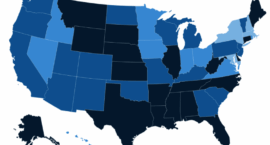
The Affordable Care Act (ACA) offers premium tax credits to help make health insurance more affordable. Under original Affordable Care Act provisions, an income cap for premium tax credits was set at 400 percent of the federal poverty level. Above that threshold, federal financial assistance was not available, creating a “subsidy cliff.”
Enhanced premium tax credits expire at the end of this year. Enrollees currently receiving premium tax credits at any level of income will see their federal assistance decrease or disappear if enhanced premium tax credits expire, with an average increase of 114 percent to what enrollees pay in premiums net of tax credits.
The impact will be greatest for those whose unsubsidized premiums are highest: older Marketplace enrollees and those living in higher-premium locales.