A Very Bad Year for Women’s Health

When I started writing for The Contrarian, a funny-not-funny inside joke was whether there would be enough fodder for a weekly democracy column that overtly centers gender. I think you already know the punchline. Suffice it to say, I did not miss a single Wednesday in all of 2025.

For my final entry of the year, we thought it worthwhile to offer a snapshot—a year’s worth of reporting on the depth of damage this administration has wreaked on women’s health, with real-time Contrarian reporting noted.

Congress Went on Recess. Americans Got Higher Healthcare Bills.

Congressional discussions on extending the Affordable Care Act (ACA) tax credits, which are set to expire Dec. 31, remain deadlocked as Congress begins its winter recess. Now, millions will see their premiums increase as a result: Payments will more than double on average—some even quadrupling—for enrollees who were eligible for the tax credits.

Without the extension, more and more ACA marketplace enrollees will drop their increasingly costly health insurance plans. This comes at a time when the ACA is more popular than ever—recent polls show that across the political spectrum, three quarters of voters support extending the tax credits.

Could the administration’s latest attack on transgender young people be the administration’s way of deflecting attention from the disaster unfolding in real time for millions of families in need of healthcare?  

What the ‘Wicked’ Weight-Loss Discourse Gets Wrong

We can’t afford to look away from changing beauty norms in our society, and how they are fueling eating disorders. 

Jennifer Rollin, an eating disorder therapist based in Maryland, says, “What I hear from a lot of clients is that when they are trying to recover from their eating disorder in this society, it almost feels wrong, because ‘everyone around me is talking about Ozempic,’ and ‘all the celebrities are talking about their big amount of weight loss.’”

But while it can feel cathartic to criticize or distance ourselves from prominent women who seem to be conforming to dangerous beauty standards, that criticism is harmful and does not bring us any closer to addressing the problem.

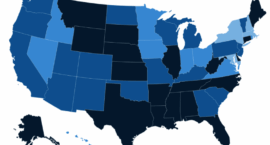
Where ACA Premiums Could Spike Most in 2026 if Congress Lets Enhanced Tax Credits Expire

The Affordable Care Act (ACA) offers premium tax credits to help make health insurance more affordable. Under original Affordable Care Act provisions, an income cap for premium tax credits was set at 400 percent of the federal poverty level. Above that threshold, federal financial assistance was not available, creating a “subsidy cliff.”

Enhanced premium tax credits expire at the end of this year. Enrollees currently receiving premium tax credits at any level of income will see their federal assistance decrease or disappear if enhanced premium tax credits expire, with an average increase of 114 percent to what enrollees pay in premiums net of tax credits.

The impact will be greatest for those whose unsubsidized premiums are highest: older Marketplace enrollees and those living in higher-premium locales.

Twenty Thousand Stillbirths a Year, and No Federal Plan to Prevent Them

The U.S. loses over 20,000 babies to stillbirth each year, with many preventable. Across the country, pregnant women say their concerns are dismissed, with devastating consequences for maternal and fetal health. Yet stillbirth remains largely invisible in policy and public discourse, and families are left to deal with these tragic and costly losses with little support.

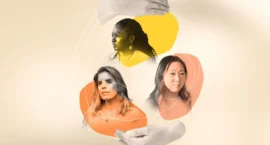
A new documentary from ProPublica, Before a Breath—based on the outlet’s Pulitzer Prize finalist reporting—follows three mothers who turn their grief from stillbirth into advocacy for safer pregnancies and better outcomes for expecting parents.

What to Know About the CDC’s Baseless New Guidance on Autism

The rewriting of a page on the CDC’s website to assert the false claim that vaccines may cause autism sparked a torrent of anger and anguish from doctors, scientists and parents who say Health and Human Services Secretary Robert F. Kennedy Jr. is wrecking the credibility of an agency they’ve long relied on for unbiased scientific evidence.

The revised CDC webpage will be used to support efforts to ditch most childhood vaccines, said Angela Rasmussen, a virologist at the University of Saskatchewan and co-editor-in-chief of the journal Vaccine. “It will be cited as evidence, even though it’s completely invented,” she said.

Dobbs Has Triggered Widespread Discrimination in Non-Reproductive Healthcare

In the years since Roe was overturned, physicians across a wide range of medical specialties have described how abortion bans are undermining their ability to follow evidence-based standards of care. Dermatologists, oncologists, neurologists, cardiologists and others told Physicians for Human Rights (PHR) that they are regularly forced to alter treatment plans, delay urgent care or avoid prescribing the most effective medications simply because those treatments could harm a pregnancy. These constraints are creating a chilling effect that reaches far beyond reproductive health and into the everyday practice of medicine.

As PHR’s Michele Heisler and Payal Shah explained, abortion bans are also fueling discriminatory care. Reproductive-age women are routinely denied the best available treatments, while men with the same conditions face no such barriers. Even within the group of reproductive-age women, clinicians are making decisions based on subjective judgments about a patient’s “contraceptive reliability”—a practice that opens the door to bias and disproportionately harms marginalized patients.

This two-tiered system of care is not hypothetical: It is already shaping medical decision-making in ban states, with dangerous consequences for patients’ health and lives.

One Megabill for the Megarich

The Trump administration is calling its new budget “the most pro-family legislation ever crafted.” But for women like Bre’Jaynae Joiner, a single mother of two in Oakland, the cuts to Medicaid and SNAP threaten her family’s very survival.

Over the next decade, more than 11 million Americans—mostly women and children—are expected to lose health coverage, while deep food assistance cuts and work requirements will push even more families into crisis. Advocates call the bill a massive transfer of wealth to the rich at the expense of the poor, a policy that will shutter rural hospitals, deny essential care and worsen maternal mortality.

As Sen. Raphael Warnock puts it plainly: “If you cut $900 billion out of Medicaid, people are going to die.”

Trump and RFK’s Pseudoscience Is Another Tool to Control Women

We have reached the point in American politics at which a sitting U.S. president sees fit to decree pregnant women must “tough it out.”

We all would be wise to strenuously push back on junk science—not just for our safety here and now, but in service of a future that doesn’t create new inroads for punishment of pregnancy.

The War on Drugs Was a War on Black Mothers

In the late 20th century, the so-called “crack baby epidemic” became a media obsession. Politicians, prosecutors and even physicians bought into a false narrative: that poor Black women who used cocaine during pregnancy were dooming their children to lives of permanent brain damage, misery and crime. The stories were sensational—and wrong. What these accounts ignored were the actual conditions of women’s lives: poverty, lack of healthcare, untreated trauma and mental illness. Instead of compassion, women like Regina McKnight—raped, grieving, depressed and self-medicating—were met with prosecution, prison sentences and public shaming.

The truth is, there was no epidemic of “biologically inferior” babies. Rigorous scientific research—largely disregarded by mainstream media—showed that cocaine exposure did not cause the catastrophic outcomes predicted by pundits. Yet the racialized panic over “crack babies” justified criminalizing pregnancy, targeting Black mothers, and fueling the broader war on drugs. These myths, and the policies they spawned, continue to shape how our legal and healthcare systems treat women—especially women of color—today.

[An excerpt from Michele Goodwin’s book Policing the Womb: Invisible Women and the Criminalization of Motherhood, published by Cambridge University Press in 2020.]

***

The road to recovery—and the right to recovery—is essential to a free and fair democracy. This essay is part of a new multimedia collection exploring the intersections of addiction, recovery and gender justice. The Right to Recovery Is Essential to Democracy is a collaboration between Ms. and the O’Neill Institute for National and Global Health at Georgetown Law, in honor of National Recovery Month.