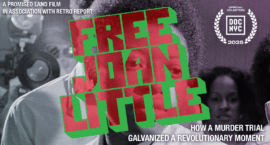



‘We’re 53 Years Ahead of Where They Were Then’: Looking Back at 50+ Years of Ms.—and Looking Forward to a Feminist Future

In a new bonus episode of Looking Back, Moving Forward, Ms. executive editor Kathy Spillar, consulting editor Carmen Rios, Ms. Committee of Scholars co-chair Janell Jobson, and legendary author, activist and professor Loretta Ross explore how the stories of our past can continue to inspire us—and give us hope in the fight forward.

“I don’t believe that the assault on women and women’s rights can be extracted from the overall dysfunction of all societies.”

“We have to keep rewriting history and reclaiming history, especially knowing that the forces out there are doing what they can to erase us.”

“There’s a long lineage of people who have been fighting this fight, because they know that we deserve justice.”

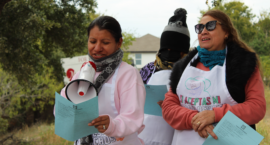
Disrupting Intimidation: How Texas Hotel Workers Are Shaking Up the Industry 

The hotel had become a place where women endured hellish conditions and were expected to stay silent.

They decided to break that silence.

***

More than 70 percent of hotel housekeepers in the United States are women. Their labor is the backbone of an industry that markets comfort but often denies dignity to those who create it. At Sonesta Select Austin North, the women who knew every hallway, every cart and every stain were treated as if they were disposable. What they experienced is a common issue when those doing the hardest work have the least power.

(This essay is part of a collection presented by Ms. and the Groundswell Fund highlighting the work of Groundswell partners advancing inclusive democracy.)

The Best and Worst Quotes of 2025, By and About Women

A collection of this year’s most inspiring and infuriating things said by and about women. Some quotes hit like a shot, others a palate cleanser. Here they are in alternating fashion. 

“Let me just tell you, you are an obnoxious—a terrible, actually a terrible reporter.”

“Yes, this work will break your heart. Some days, it will exhaust you, and still, you must continue, because here’s what the research ultimately shows: When younger people lead, democracy doesn’t just survive, it thrives.”

“We are initiated into a sisterhood. We’re in a sorority that none of us asked to join, but we all stand here today, stronger together, because our collective voice is powerful.” 

A Global Telehealth First: Women Help Women Begins Producing Abortion Pill Combipack

The feminist telehealth provider Women Help Women is redesigning how abortion pills are packaged to reflect what users actually need: a combination pack that includes one mifepristone tablet and eight misoprostol tablets for use up to 12 weeks of pregnancy.

“It’s a huge revolution of who actually gets to decide when, how and with the support of whom they can have an abortion and until when,” said Women Help Women coexecutive director Kinga Jelinska. “It centers the needs of users rather than institutions or markets. The underlying notion is that abortion can be friendly, and abortion can be easy.” 

Self-managed abortion is disruptive. We were told that abortion is a difficult decision; that it has to be difficult to access, and that only doctors control it. Self-managed abortion subverts that,” said Lucía Berro Pizzarossa, fellow coexecutive founder.

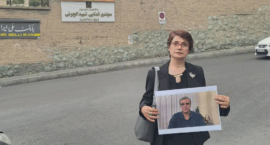
Reza Khandan: A Year in Prison for Supporting Women’s Rights

It has been a year since 60-year-old Iranian human rights activist Reza Khandan was arrested in what was clearly another official attack on his family. Political prisoners in authoritarian regimes are meant to disappear into hopeless silence, but Reza has become a force to be reckoned with.

“The crime for which Reza Khandan is in prison is the crime of love,” writes Ariel Dorfman, author and friend of Khandan and his wife, activist Nasrin Sotoudeh. “Not just love of his country and its culture. Not just love of humanity and our rights to be human. Not just love for the future. But also, the real reason why he is being punished: Reza loves the extraordinary Nasrin with whom he shares a life, a land, and a cause. How those who persecute Reza must fear his loyalty and steadfastness. He will prevail.”

“I will continue until I achieve legal rights, restore my family’s dignity, and change the conditions of the prison administration,” Khandan wrote. “May the shadow of terror and tyranny be removed from our beloved country one day. And finally, I would like to add: ‘I object to the compulsory hijab!’” 

She Was an Antiabortion Poster Child. Now She’s a Reproductive Freedom Activist.

At the age of 15, Charlotte Isenberg took to social media to process complicated feelings about a miscarriage after alleged sexual abuse. That was what first brought her to the attention of antiabortion groups.

“Almost immediately, anti-abortion actors threaded a narrative for me between my grief, my miscarriage and anti-abortion sentiment. I clung to it with desperation,” Isenberg wrote.

Feeling isolated from peers due to both her traumatic experiences and the COVID-19 pandemic, Isenberg found a sense of belonging in these online spaces.

But in May 2024, at age 20, Isenberg says her birth control failed, and she became pregnant for the second time. The timing was devastating: She was unemployed, without stable housing or transportation, and preparing to relocate for college—the first in her family to access higher education. 

When she couldn’t find adequate support for her unplanned pregnancy, Isenberg scheduled an appointment at her local Planned Parenthood for an abortion consultation, unsure of what she would ultimately decide. Another prominent antiabortion activist, one of Isenberg’s best friends in the movement, found out about her appointment; she and other members of the group intervened aggressively.

Despite this pressure, Isenberg was able to make the decision that was best for her and her body. Since her own abortion, she’s become a reproductive freedom activist, educating others about extremist antiabortion tactics and promoting systemic protections for people navigating reproductive healthcare. 

The Resistance Is Everywhere

These past 10 months have been tough. Every day a fresh outrage, more trampling of the Constitution and a new attack on common decency. Taking a page from Hollywood, Trump and his administration seem to have embraced a strategy of “everything, everywhere all at once.” 

But, unfortunately for them: The resistance has also been everywhere all at once, too.

There is no doubt that when historians look back on this sordid moment in history, they will conclude that it was women, and feminists, who led the way out of it.

Ahead of the Country: How Florida’s Progressive Fight Against Authoritarianism Is Setting the Tone

Like many others across the nation, people gathered outside the Duval County Courthouse in Jacksonville, Fla., on Oct. 18, 2025, to send a message: No Kings. People played music and danced. Kids found space to throw a football. People ran into old friends. 

“What really stood out to me was how much fun it was. I mean, people were enjoying themselves. You had people in frog costumes and other things. You had some pretty funny signs,” says Larry Hannan, communications and policy director for State Voices Florida, who attended the No Kings rally in Jacksonville. 

While Florida has trended red in the last decade, its voters have consistently favored progressive measures. In 2024, Florida’s Right to Abortion Initiative, as well as the state’s Marijuana Legalization Initiative, received 57 and 56 percent of the vote, respectively. Even though both measures were supported by the majority of voters, both initiatives were struck down because they failed to meet Florida’s 60 percent supermajority.

“In a lot of ways, the better we fight back here, the better the country is. Because a lot of people are saying, ‘Oh, I can’t believe this is happening.’ And us in Florida are saying, ‘Yeah, this happened a few years ago,’” says Hannan, who noted that Florida has served as a rough draft for the conservative MAGA movement, since many of the president’s current advisers are former Florida officials.